


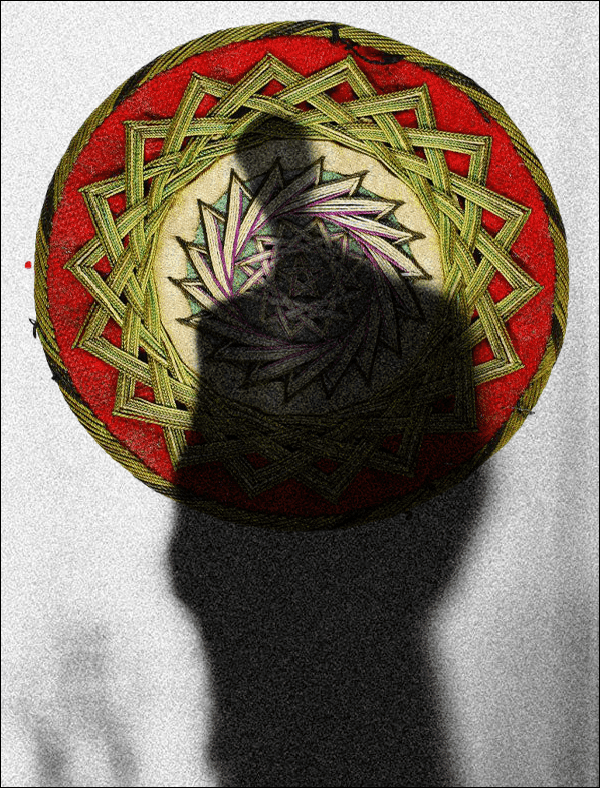
A Mysterious Qadirî Sheikh, Edhem Efendi of Plovdiv
Edhem Efendi personally attended to the spiritual education of Hatîce Cenan Hanım and Ken’ân Rifâî. He was a Qadirî sheikh residing in Plovdiv with no official position as a lodge sheikh. After the Bulgarian uprising, he was appointed as an officer at the Istanbul Eminönü Post Office Department.Sources describe him as a melihü’l-vech (handsome-faced) figure. Nezihe Araz paints a mysterious Sufi portrait when describing Edhem Efendi of Plovdiv. According to narratives, Edhem Efendi was passionate, blessed, and secretive, traits that recall Şems-i Tebrîzî.
In Rifâî’s narration, Edhem Efendi is a perfect person in whom the character of the Prophet Muhammad (peace be upon him) is hidden in essence. Always engaged in the remembrance of God, shedding tears whenever God’s name is mentioned, Edhem Efendi is described by Rifâî as a content, noble, and generous personality.

Qadirî Spiritual Path and Discipline
The year 1889-90, when Ken’ân Rifâî began working at Maârif, can be considered the period when he affiliated with Sufism. Just before starting his duty in Balıkesir, he entered the spiritual training of Edhem Efendi of Plovdiv. Edhem Efendi accompanied him to Balıkesir.Examining Ken’ân Rifâî’s spiritual training in Balıkesir, two main aspects stand out: the Qadirî path (sulûk) and discipline (riyâzet). Under the supervision of his guide, Edhem Efendi of Plovdiv, Rifâî completed his spiritual journey while adhering to a diet consisting only of dry bread and olives. Discipline not only accelerated his spiritual growth but also aimed to strengthen him against the harsh conditions he would face throughout his life.
While in Balıkesir, by order of his sheikh, Ken’ân Rifâî began ney practice and musical training. According to available information, he made rapid progress in both. Rifâî expressed his spiritual experience during this period with the words, “I increasingly realized that I was new to the world and that there was much to learn and know, and that what I knew until then was only a mere envelope.”
After completing his spiritual guidance duty to Hatîce Cenan Hanım and Ken’ân Rifâî, Edhem Efendi received a sign that he would pass away and subsequently departed from this world at the age of forty-five.
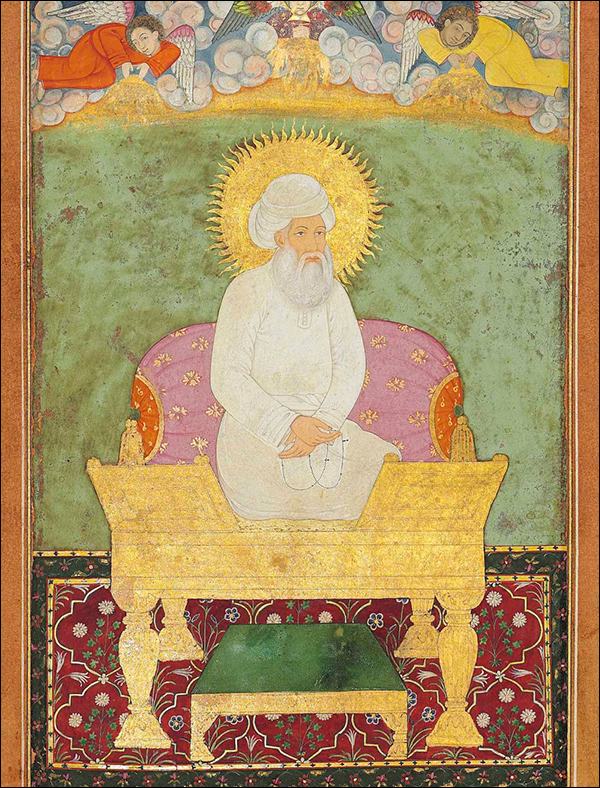
Qadiriyya
The first and most widespread Sufi order in the Islamic world attributed to Abdülkādir-i Geylânî (d. 561/1165-66).Born in Gîlân (Geylân) and educated in religious sciences in Baghdad before turning to Sufism, Abdülkādir-i Geylânî’s role as a teacher and preacher helped his ideas gain wide recognition and acceptance. The Qadiriyya order spread throughout the Islamic world, especially in Iraq.
The arrival of Qadiriyya in Anatolia occurred in the 15th century through Eşrefoğlu Rûmî, who received spiritual succession from Hüseyin el-Hamevî, a descendant of Abdülkādir-i Geylânî. It gained widespread influence especially in Istanbul, Anatolia, and the Balkans.
In his will, Geylânî advised his son to adhere strictly to religious commands and prohibitions and to be pious. He stated that the order is based on the Book and the Sunnah; that inner peace, generosity, abundant charity, endurance of all hardships, and helping the troubles of brothers are the principles of this path. The Qadiriyya has five fundamental rules: elevate determination, avoid the forbidden, beautify service, increase perseverance, and respect blessings.
Unlike the Arab-origin branches of Qadiriyya, its branches in Turkey place great importance on the symbolism of the order. There are several types of Qadirî crowns decorated with order symbols. The most famous is the crown with a tall, pointed dome known as the Baghdad or Celâlî mustache crown.
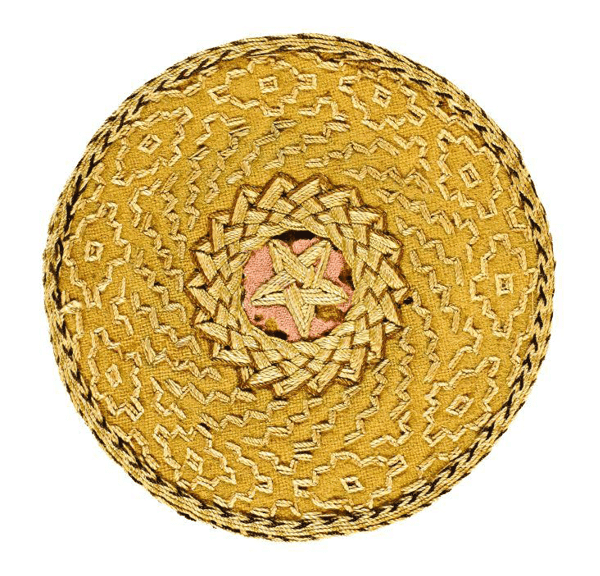
The Qadirî Seal and the Qadirî Rose
The symbolic meaning of the Qadirî seal and the Qadirî rose, the most important emblem of the Qadirî crown, traces back to Abdülkādir Geylânî. It is narrated that when Geylânî arrived in Baghdad one winter day, the city’s saints sent him a bowl filled with water or milk, implying, “We are like the contents of this bowl, this water/milk surrounds the city just as we do.” The Great Pir replied fittingly by returning the bowl with a fresh rose placed inside, symbolizing, “You may be the water/milk in this bowl, but I am the rose within it.” After this event, the saints of Baghdad recognized him as the Sheikh of Sheikhs. Since then, the Qadirî rose has been used in various places.
Spiritual Journey in the Qadiriyya Order
In the Qadiriyya order, the spiritual journey (seyrüsülûk) is carried out by reciting the seven names of God (esmâ-i seb‘a), as in all other esoteric orders. The essential names are Lâ ilâhe illallah, Allah, Hû, Hayy, Vâhid, Azîz, Vedûd; the derivative names are Hak, Kahhâr, Kayyûm, Vehhâb, Müheymin. Each essential name is recited a certain number of times corresponding to one of the seven stages of the nafs (self): (emmâre, levvâme, mülhime, mutmainne, râziye, marziyye, kâmile).Lessons and daily litanies (vird) are duties that the dervish must perform alone at specific times throughout their spiritual education. These duties vary according to the dervish’s rank and become more demanding as the rank increases.
A seeker (sâlik) can only complete the stage of his journey under the supervision of his guide (mürşid) and, with permission, move to the next stage. Depending on his aptitude and capacity, he may surpass all stages to reach the rank of perfect self (nefs-i kâmile) or remain stuck at a certain stage.
Qadiriyya members recite daily litanies such as Hizbü’l-Ibtihâl, Hizbü’s-Süryûniyye, Fethu’l-Beşâir, Hizbü’l-Fethiyye, and Hizbü’t-Temcîd after obligatory prayers. These were established by Abdülkādir-i Geylânî. In addition, other prayers and litanies composed by Abdülkādir-i Geylânî, such as Kibrîtü’l-Ahmer, Salâtü’l-Kübrâ, Hizbü’n-Nasr, and various salawats, are recited on special occasions.
Practices in Qadiriyya Suluk
Istigâse is the request for help; a plea for assistance from the spiritual presence of Geylânî Hazretleri when needed.Teveccüh is the mutual affectionate turning of the sheikh and the dervish toward each other.
Murâkabe means to watch and observe; it is the state of being fully aware that one is under God’s supervision.
Râbıta is connection and attachment; it means the dervish mentally visualizes the image of his sheikh and hopes to receive spiritual grace.
Rüya is the observation of certain objects and events seen during sleep or waking moments and their interpretation by informing the sheikh.
Halvet and Uzlet are practices of seclusion to be with God, emphasizing distancing oneself from people. Practically, under the supervision of a sheikh, it involves spending a period in isolation away from the outside world, eating and drinking little, and not seeing anyone to prepare for divine manifestations, spiritual discovery, and knowledge.
Since the early Sufis, hunger has been an essential method in the spiritual training of dervishes. The motif also appears in stories about Abdülkadir-i Geylânî. Eşrefoğlu Rûmî states that eating less weakens the nafs, thus stopping its control over the body and allowing the mind to dominate. According to Eşrefoğlu, hunger is wakefulness; in the Sharia, eating after the stomach is full is forbidden, but in the path, the dervish should stop eating before feeling full. If hunger becomes severe enough to hinder worship, one meal is permitted, but more is forbidden. The essential thing for the dervish is to avoid eating before hunger reaches its peak.
References:
This article was published in the 24th volume of the TDV Islamic Encyclopedia, Istanbul, 2001, pages 131-136.
Doctoral Thesis; THE QADIRI ORDER: THE HALISIYYE BRANCH, Mikail DUMLU, p.28
Master’s Thesis; ETIQUETTE AND CEREMONIES IN QADIRIYYA (EŞREFİYYERÛMİYYE), ŞEVKET ŞAHİN ÖZEN, p.124.
