


SAKAL-I SHERIF
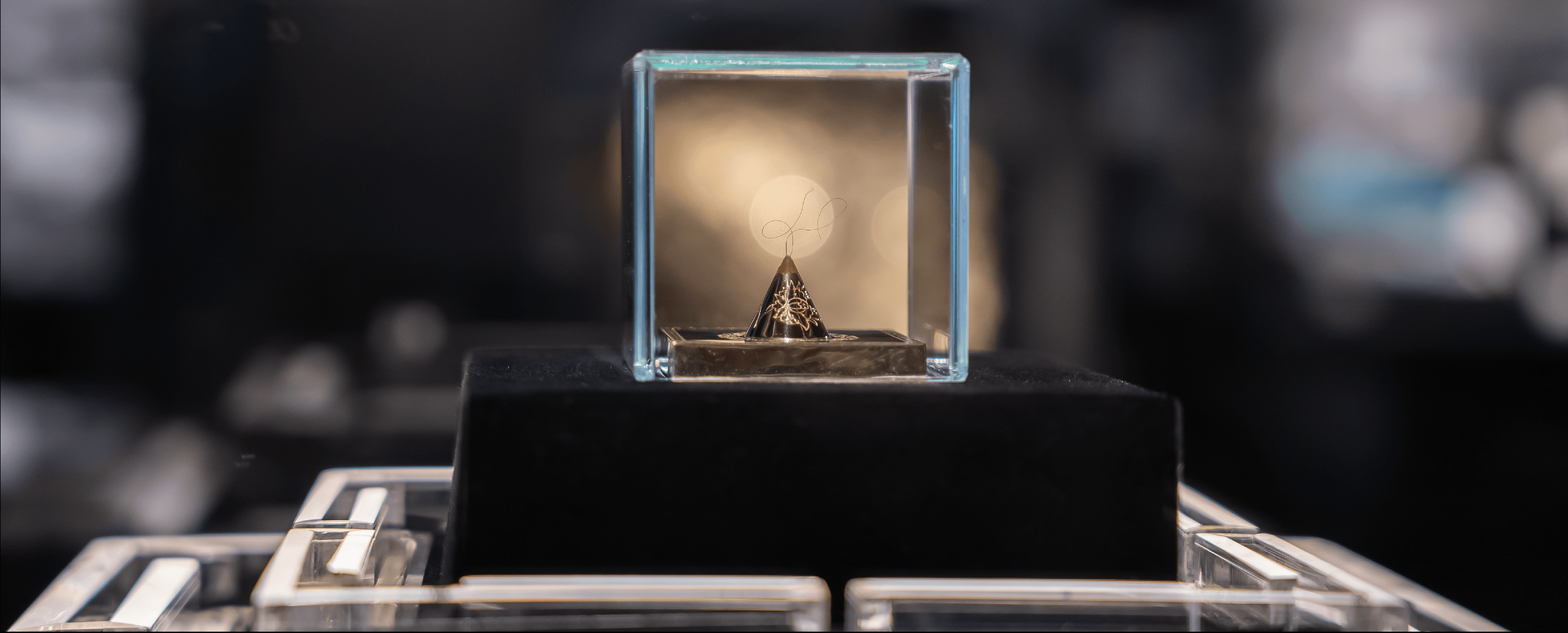
SAKAL-I SHERIF
During the days of Eid al-Fitr and on the night of Laylat al-Qadr during Ramadan, you can visit the Sacred Beard in our exhibition hall between 9:00 a.m. and 2:00 p.m.
Hair and Beard Strands Belonging to the Prophet (peace be upon him)
The strands of the hair and beard of the Messenger of Allah are preserved in mosques and houses around the world under the names of “lihye-i saâdet, lihye-i sharif, beard-i sharif”.
Hz. It is known that the strands of hair and beard cut during the Prophet’s shaving have survived to the present day because some of the Companions took them and kept them.
Hz. The love for the Prophet Muhammad stands out as a unifying factor for Muslim Turks, and this love, which is not limited to the Prophet himself, is expanded to include the people and objects he came into contact with. Among these items, which are protected as sacred relics, the beards of the Prophet are the most numerous.
In the Ottoman tradition, the beards are usually kept in special cases in mosques, dervish lodges and hans, and are opened to visitors on holy days and nights. When the beards in forty layers of bundles are unveiled to the accompaniment of the takbir and salat al-ummiyyah recited by the visitors, it is known that the enclosures are venerated either by salavating or kissing them while passing by, depending on the intensity of the congregation. It is said that the reason behind the circulation of the beards between the mosques on the nights of Ramadan is to enable the people to receive pleasure and love.
The Story of the Stand

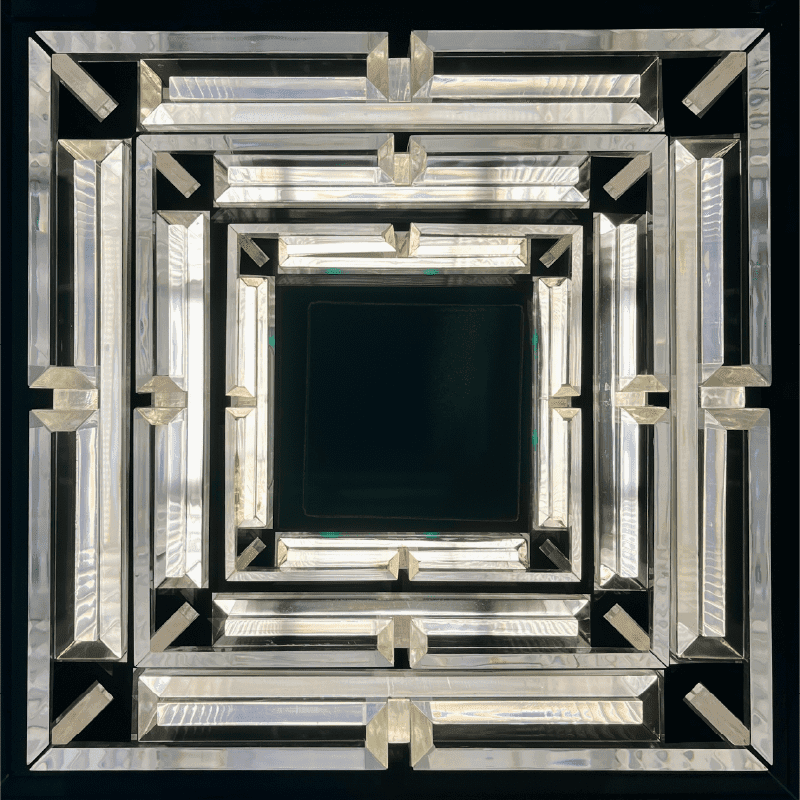

In the Ottoman tradition, “Holy Relics” were wrapped in forty layers of silk bundles.
The transparent layers you see in the showcase, repeating from the inside out, symbolize this forty-layer bundle.
Each layer you see reflects the word “hub” written in “kufic calligraphy”. This word of Arabic origin means “love-love”. The choice of the expression “muhabbet” for calligraphy is based on the fact that it symbolizes the love for the Prophet Muhammad (s.a.s.) through the intertwined “rings of love”.
In the center of the design, which consists of three-dimensional “hub” words written inside each other, there is a black, square section. This section consists of the dot of all the letters “B” gathered in the center, which is identified with the perfect human being in Sufism through Hz. Ali’s saying “I am the dot under B”. For this very reason, it is at the center of the design and carries the Sakal-i Sharif, which is kept in a black case.
(O Muhammad) Say: “I am a human being like you (I am not an angel), but it has been revealed to me that your God is one God…” In contrast to the angular form of the kufic calligraphy, which symbolizes human beings in reference to the verse, the pedestal bearing the Prophet’s relic has a completely different rounded form, and the Turkish ornamental motifs with which it is decorated represent the Ottoman love for the Prophet.
The three-dimensional kufic calligraphy in the showcase bears the signature of Mohammed Imad Mahhouk.
Hattat Mohammed Imad Mahhouk
 Born in 1959 in Syria, Mohammed Imad MAHHOUK graduated from the Department of Atomic Physics at Aleppo University. He received his diploma in manuscript restoration from Süleymaniye Library in 1990. In calligraphy, he studied under Hasan Çelebi. He worked in his own workshop in Aleppo, Al-Sultaniaa Mosque and King Abd Alaziz Library in Riyadh.
Imad Mahouk, who has restored many manuscripts and Mushafs, also brought calligraphy works designed by himself and decorated with gold gilding to the world of culture.
Since 1992, he started to participate in the annual exhibitions in Aleppo; in 1997, he opened his first solo exhibition in Aleppo. In 2006, he made special designs for the Aleppo Festival, which was chosen as the “Islamic Capital of Culture”. He wrote 40 chapters from the Holy Qur’an in different types of writing. One copy of the Qur’ân al-kerîm, which he wrote in Jalî Muhakkak script, was sent to Qatar and the other to Arabia.
In 2007, he participated in the Islamic Exhibition in London. Since 2013, he has held solo exhibitions in many art centers in Istanbul, especially Çelebi Gallery. The artist, whose works are included in important calligraphy collections in Arab countries and Europe, continued to live in Istanbul and continue to work in his own studio and participate in joint exhibitions.
