


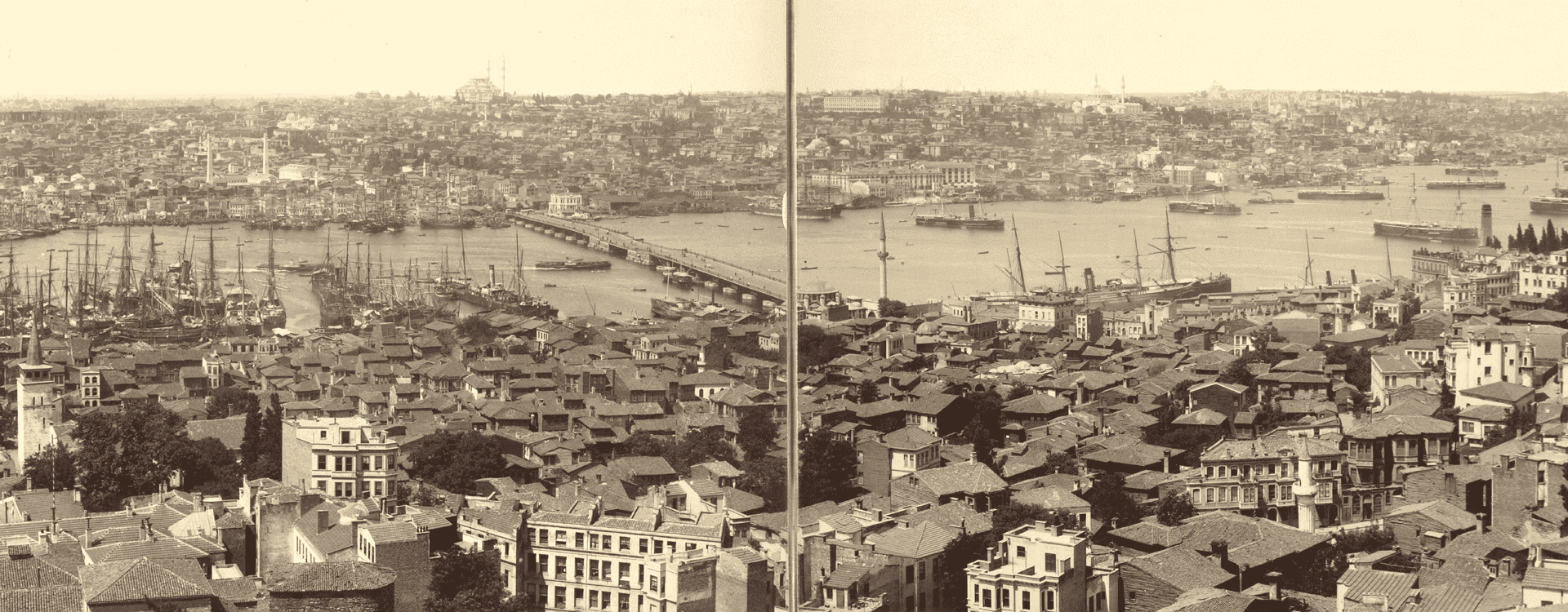
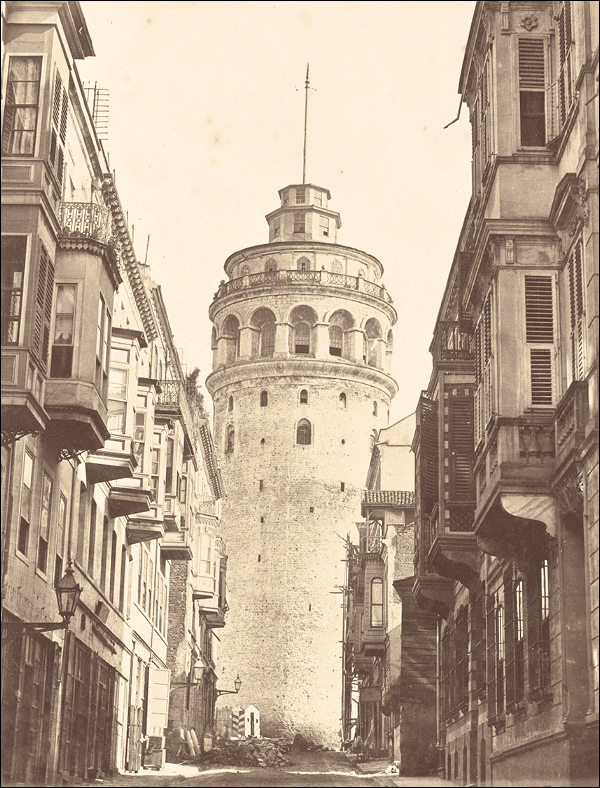
From the Streets of Plovdiv to Beyoğlu
The most important educational institution in Ken’ân Rifâî’s life was Galatasaray Mekteb-i Sultânîsi, which he started at the age of eight and attended for about eleven years (1877-1888). He received his initial education at the Sıbyan School in Plovdiv. His father, Abdülhalim Bey, while preparing to leave Plovdiv, first enrolled his son as a permanent boarding student at Galatasaray.Rifâî, a literature department student, had the opportunity to read both classical and modern works of French, German, and Latin—the root of many European languages—through his education. He also studied Arabic and Persian, important for religious and Sufi sciences, during his Sultânî education.
The most important skill Ken’ân Rifâî gained from Galatasaray Mekteb-i Sultânîsi was, in line with the school’s purpose, the ability to synthesize different cultures. Indeed, during his duties as director of education and as a tekke sheikh, he used this skill, acquired through his Sultânî education, as a tool for improving individuals and society, especially for overcoming cultural dilemmas.
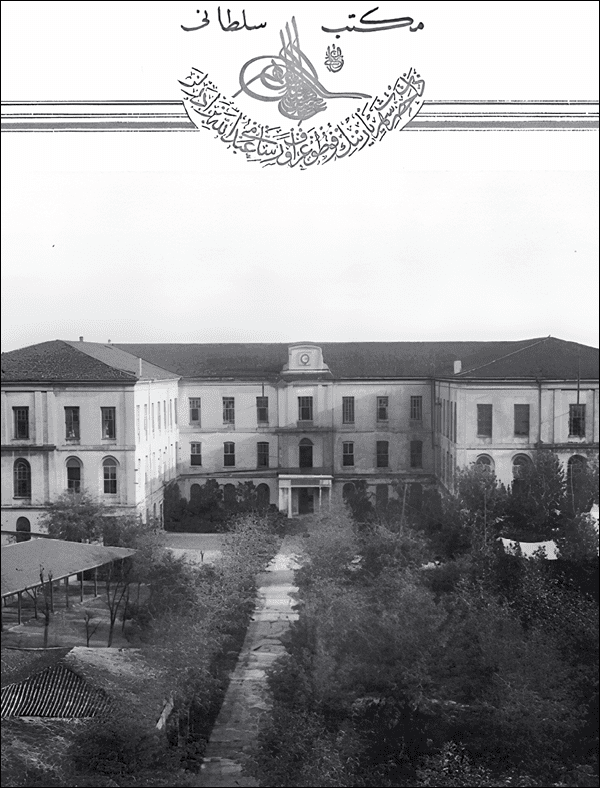
Brief History of Galatasaray Mekteb-i Sultânîsi
Galatasaray Mekteb-i Sultânîsi holds an important place in Turkish educational history, with roots dating back to the reign of Sultan Bayezid II. According to legend, upon returning from a hunt, the Sultan met an elderly man known as Gülbaba. Pleased with his hospitality and conversation, the Sultan asked if he had a wish. Gülbaba pointed to the slopes of Beyoğlu where the high school now stands and expressed his desire for a school to be built there. Founded in 1431 as the Galata Sarayı Enderûn Mektebi, this institution underwent several changes over time.The 19th century was a period when modernization efforts accelerated in the Ottoman Empire. The Enderûn School, one of the significant educational institutions in the country, was not exempt from this change. The Enderûn School later transformed into the Galatasaray Medical School and then the Galatasaray Mekteb-i Sultânîsi. This institution would later serve as a model for high schools opened in other provinces.
The Mekteb-i Sultânî started education on September 1, 1868. Its aim was to train competent civil servants for the state and to form an elite class needed during the implementation of the Tanzimat reforms. Many graduates of this school served in important state positions.
After the proclamation of the Republic in 1923, the name Mekteb-i Sultânî was changed to Galatasaray High School, and since 1994, Galatasaray University has been included within the institution.
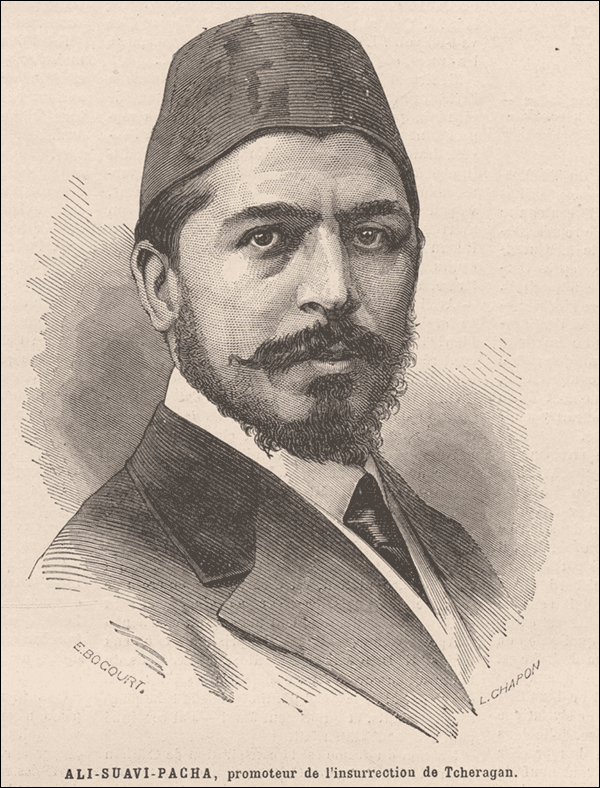
Ali Suâvi (d. 1878)
A thinker and activist during the late Ottoman period, journalist, member of the Young Ottoman Society, and one of the first Turkish nationalists. Although Ali Suâvi did not receive a classical madrasa education or formal schooling, he engaged with many subjects including philosophy, philology, history, geography, literature, politics, sociology, economics, and religious sciences. He particularly focused on issues related to Turkish nationalism, Islamism, language simplification, state administration, the caliphate, politics, and morality, seeking solutions to the problems of the Ottoman state and society.It is worth noting that Ken’ân Rifâî’s early years at Galatasaray Sultânîsi coincided with Ali Suâvi’s tenure as director (until 1878). Starting from his appointment in 1877, Ali Suâvi implemented a series of reforms reflecting the educational understanding of the Abdülhamid era, which later served as a model for further reforms. These included appointing teachers mostly of Turkish and Muslim origin and incorporating Arabic, Ottoman Turkish, Persian, ethics, and creed courses into the curriculum.

Recâizâde Mahmud Ekrem (d. 1914)
One of the leading poets and writers of 19th-century Ottoman Turkish literature. He was a principal representative of the Reform Movement (Tanzimat) which began with Şinâsi in the 1860s and developed through Namık Kemal and Abdülhak Hâmid. Although Recâizâde Ekrem was close to the members of the Young Ottomans Society, he did not participate actively in politics but focused more on literary reform. During his teaching at both the Mekteb-i Sultânî and Mekteb-i Mülkiye, his authoritative personality earned him the affection of his students, who called him “Master Ekrem.” He contributed to the development of European poetry and literature through his works, ideas, and guidance to young people.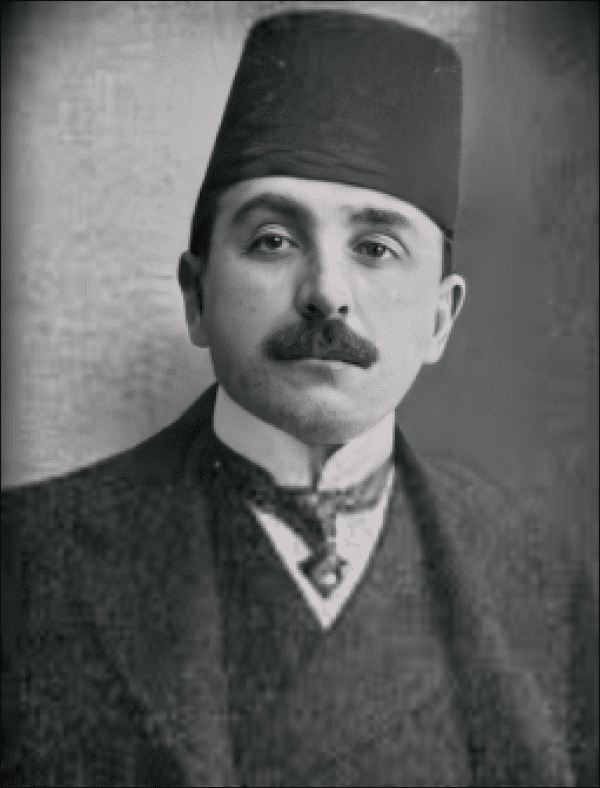
Muallim Nâci (d. 1893)
Muallim Nâci was a Turkish writer, poet, teacher, and critic. He was a Tanzimat-period poet who worked to perfectly adapt the Arabic prosody (aruz) to Turkish. Advocating renewal without breaking ties with the old, he is considered a representative of “old poetry” in literary history. From 1983, he managed the literature page of the newspaper Tercümân-ı Hakîkat for some time.Influences of Muallim Nâci, who largely maintained a traditional approach, can be felt in Rifâî’s poetry. His strong rapport with his teachers is also notable. Muallim Nâci called Rifâî an “orator” because of his poetry reading skills. It is recorded that Muallim Nâci wrote this couplet for Rifâî: “Is there any gazelle like you in the world? / Are you Yusuf of Ken’ân with this beauty?” Also, about ten years after Rifâî’s graduation, when asked “Teacher, have you forgotten me?” by Rifâî, Muallim Nâci replied, “Can Ken’ân’s lands be forgotten? Can Ken’ân’s lands be forgotten?”

Muallim (Ahmed) Feyzî (d. 1910)
Muallim Ahmed Feyzi, one of the last bureaucrats, educators, writers, and poets, was born in Tabriz. He was the son of the scholar Esed Molla. After receiving education at Al-Azhar, he came to Istanbul and obtained Ottoman citizenship, subsequently serving in educational roles. He taught Persian at Galatasaray Sultânîsi and wrote articles under the pen name “Sürûş” for the newspaper Tercümân-ı Hakîkat.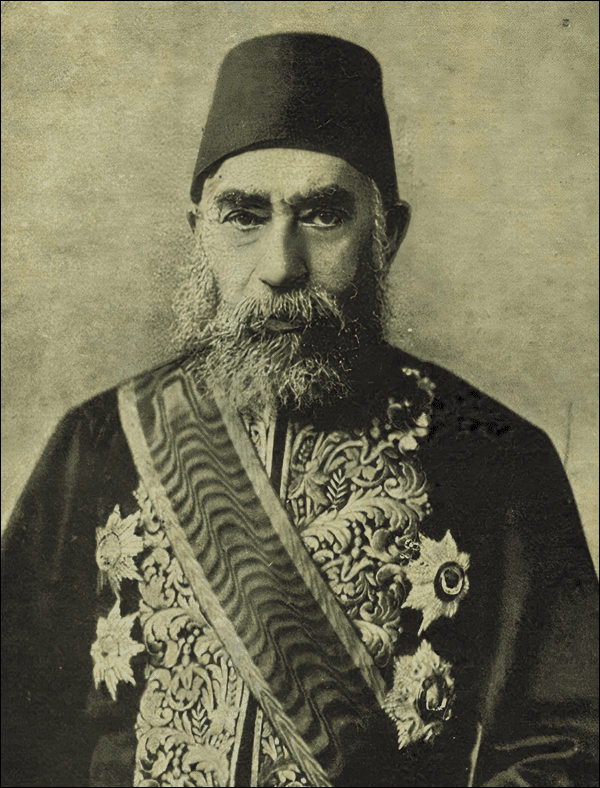
Münif Mehmet Pasha (d. 1910)
Münif Mehmet Pasha (d. 1910), Ken’ân Rifâî’s psychology teacher, was a thinker and educator who, despite coming from a madrasa background, interacted with different intellectual circles while working at the Bâbıâli translation office and serving as chief secretary at the Berlin Embassy. He was known for opposing customs that held society back. According to Hilmi Ziya Ülken, Münif Pasha was a teacher of progressive civilization and played a role in late Ottoman education similar to that of 18th-century French encyclopedists.
Mehmet Zihnî Efendi (d. 1919)
Mehmed Zihnî Efendi was an educator who held the position of ulûm-i âliye (medrese faculty) and served on many commissions and assemblies within the Ministry of Education. When he started teaching Arabic and religious sciences at Galatasaray Mekteb-i Sultânîsi in 1879, Ken’ân Rifâî was a student in the school’s secondary section. Zihnî Efendi was an intelligent, attentive, critical, and disciplined scholar. Hulusî Kılıç writes in the Islam Encyclopedia: “During his teaching at Galatasaray Mekteb-i Sultânîsi and Mekteb-i Mülkiye, he trained many valuable students through his pioneering teaching. Babanzâde Ahmed Nâim, Ali Nazimâ, Ken’ân Rifâî, Hanbelîzâde Muhammed Şâkir, and Abdülhak Şinâsi Hisar were among them.”Rifâî benefited from Mehmet Zihnî Efendi to enrich his religious knowledge.
