


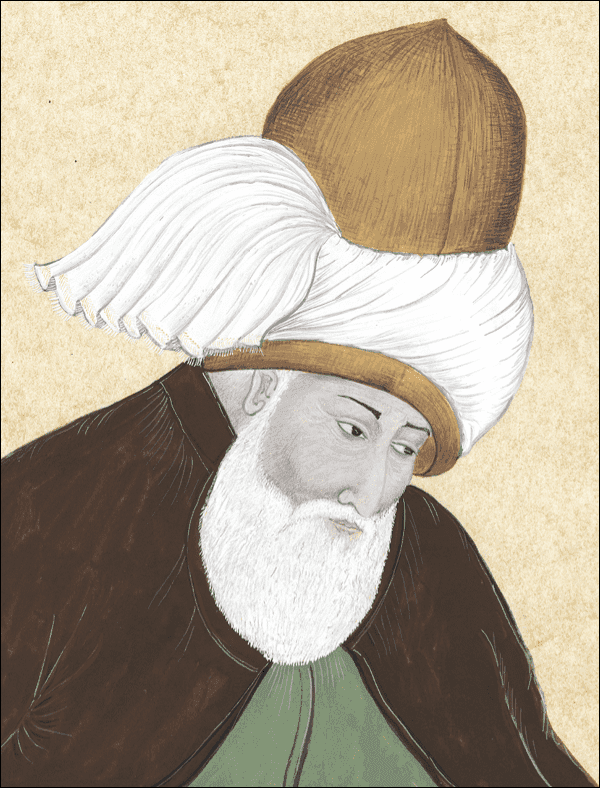
The Mevlevi order’s identity as a tariqa began to form during the time of Hz. Mevlânâ’s son, Sultan Veled. Sultan Veled’s leaving the spiritual leadership to his son Ulu Ârif Çelebi marked a turning point in the tariqa’s history. Following this event, Mevlevi order started to be represented by sheikhs belonging to Mevlânâ’s lineage, who bore the title “çelebi.” The Konya Mevlânâ Lodge and the office of çelebi became the administrative center of the Mevlevi tariqa.
Mevlevi order, initially widespread among the Turkish principalities in Anatolia, entered Ottoman lands with the Mevlevihane established by Murad II in Edirne (1426). The first asitâne or Mevlevihane of Istanbul is the Kulekapı (Galata) Mevlevihane, established in 1491 with the permission of Bayezid II.

The Mevlevi dhikr known as Semâ’ Âyin-i Şerîfi symbolically represents the creation of the universe, the awakening of man in the world, the movement stirred by love for the Almighty Creator, the realization of servitude, and the progression toward the perfect human being (insan-ı kâmil). The dervishes’ hats symbolize tombstones; their cloaks symbolize their graves; their skirts symbolize their shrouds. They have stripped themselves of the world and are love moths of the unseen realm.
The views of Hz. Mevlânâ, and the works and translations about him, continue to influence a wide audience worldwide today.
Ken’ân Rifâî’s Mesnevî interpretations have aroused affection and interest within lodge circles, and as a result of this positive influence, he was granted honorary Mevlevi authorization (icâzet) from the Konya Mevlevihane. Ken’ân Rifâî notes that he received this Mevlevi authorization in Medina directly from the spiritual meaning of the Prophet himself.
