


Dhikr
REMEMBERING GOD
Dhikr
REMEMBERING GOD
The emphasis on dhikr in the Qur’an al-Karim and hadiths has placed the principle of remembering Allah abundantly at the center of Sufi life. In Sufi orders, dhikr is considered the greatest form of worship that brings the servant closer to their Lord and the most crucial element of *riyāzah*, the practice of self-discipline. The sheikhs assign the most suitable form of dhikr according to the condition of the disciple and guide them toward the Truth. The disciple repeats the given dhikr the prescribed number of times. In Sufi orders, dhikr is also performed collectively under the guidance of the sheikh or his deputy, where certain phrases are recited in a particular sequence with specific movements. These collective forms of dhikr are called *tarīqat rituals* (tarîkat âyini).

Vocal Dhikr (Cehrî Zikir)
In Sufi orders whose spiritual lineage traces back to ʿAlī, such as Qādiriyya, Rifāʿiyya, Suhrawardiyya, Saʿdiyya, Shādhiliyya, Badawiyya, Khalwatiyya, Bayramiyya, and Mawlawiyya, dhikr is typically performed aloud (cehrî) and with movement. It often involves the repetition of certain Names from the *asmāʾ al-ḥusnā* (Beautiful Names of God), the *kalimat al-tawḥīd* (lā ilāha illā Allāh), or the Divine Name itself (*ism al-dhāt*). Through these practices, the seven levels of the soul (*nafs*), from the commanding soul (*ammārah*) to the perfected one (*kāmilah*), are gradually traversed. Since this method includes invoking various Names of God, it is also referred to as the *path of names* (*esmā ṭarīqī*). Sufi orders that follow vocal dhikr have collective dhikr forms known by names such as *majlis*, *ḥaḍrah*, *layla*, *dhikr-i erre*, *samāʿ*, and *devrān*, often accompanied by music.
Silent Dhikr (Hafî Zikir)
In the Naqshbandiyya order, which traces its spiritual chain to Abū Bakr, dhikr is generally performed silently (*hafî*) and from the heart. This includes the remembrance of the Divine Name (*ism al-dhāt* — Allāh) and the *dhikr of negation and affirmation* (lā ilāha illā Allāh). While performing the dhikr alone, the disciple sits in calm and focuses on the five spiritual faculties (*laṭāʾif al-khamsah*) believed to reside in the chest: *qalb* (heart), *rūḥ* (spirit), *sirr* (secret), *khafī* (hidden), and *akhfā* (most hidden). When all these faculties join the remembrance, including the *nafs* believed to be between the eyebrows, the entire body becomes engaged in dhikr. After this, one proceeds to the *kalimat al-tawḥīd*. The Naqshbandiyya order also performs collective dhikr known as *khatm al-khwājagān*.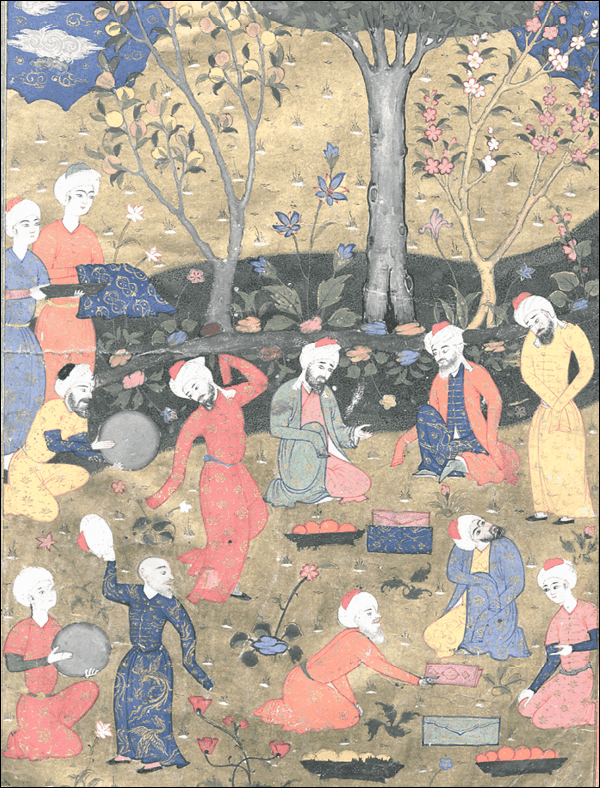
Music
In some Sufi orders, music is occasionally integrated with dhikr. In those that perform vocal dhikr, forms of *tekke* (Sufi lodge) music are practiced in an exuberant style. To support rhythm, percussion instruments such as *halīleh*, *mazhar*, *bendīr*, *kudūm*, *navbah*, and the reed flute (*ney*) are used. These sessions are directed by the sheikh, head chanter (*zākirbaşı*), floor steward (*meydancı*), and leaders, and they last as long as deemed appropriate. While the dervishes perform dhikr, the chanters sing *ilāhīs* (divine hymns) matching the rhythm. In orders that perform silent dhikr, musical recitation is limited to Qur’anic tilāwah, adhān, *qāmah*, *ṣalāt*, *takbīr*, and *tasbīḥ*.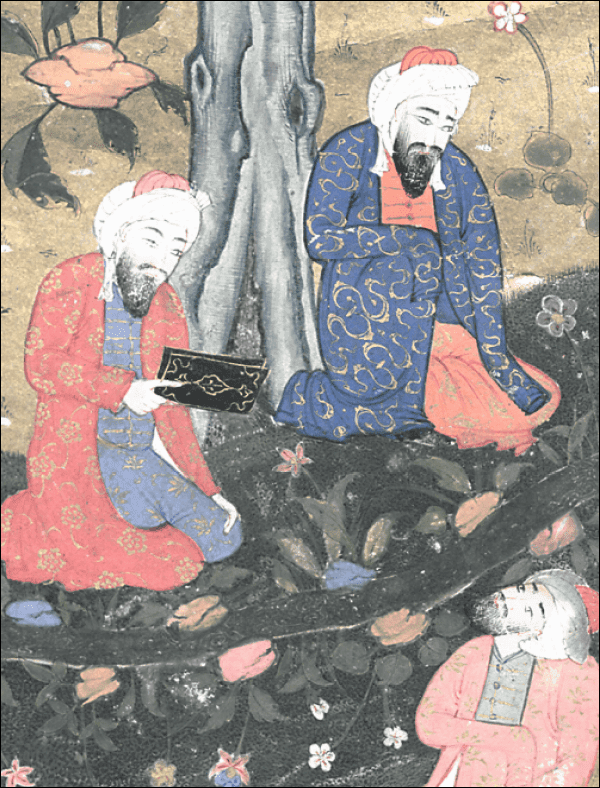
Awrād and Aḥzāb
In Sufi orders, acts of worship, supplication, and remembrance performed at specific times and quantities with the permission of a spiritual guide are called *awrād* (plural of *wird*). Prayers made to attain specific goals are known as *aḥzāb* (plural of *ḥizb*). The oldest and most comprehensive source on *awrād* is *Qūt al-qulūb* by Abū Ṭālib al-Makkī (d. 996). Over time, many Sufi orders have developed collections of *awrād* and *aḥzāb*, often compiled by the founding sheikhs themselves.Ḥizb al-Baḥr and Ḥizb al-Barr
Prepared by Abū’l-Ḥasan al-Shādhilī (d. 1258), the founder of the Shādhiliyya order. These are among the most widely read *awrād*, containing concise glorifications and supplications.
Awrād al-Fatḥiyya
Another well-known compilation arranged by Sayyid ʿAlī Hamadānī (d. 1335) of the Kubrawiyya order. It includes numerous phrases starting with *istighfār* (seeking forgiveness), *tawḥīd*, *subḥānallāh*, *ḥasbunallāh*, and *ṣalawāt*.
Wird al-Sattār
One of the most famous *awrād* in various Sufi orders, compiled by the second pir of the Khalwatiyya, Sayyid Yaḥyā al-Shirwānī (d. 1466). It begins with “Yā Sattār” and is widely known as *Wird al-Sattār*.
(*Many published awrād collections from various Sufi orders also exist.*)
